
Why We Recommend Joining a Group for Fly-Cruise Antarctica
Fly-cruise Antarctica skips sailing the Drake Passage, but weather windows, hotel resources, onboard coordination and delay handling all require a professional team.
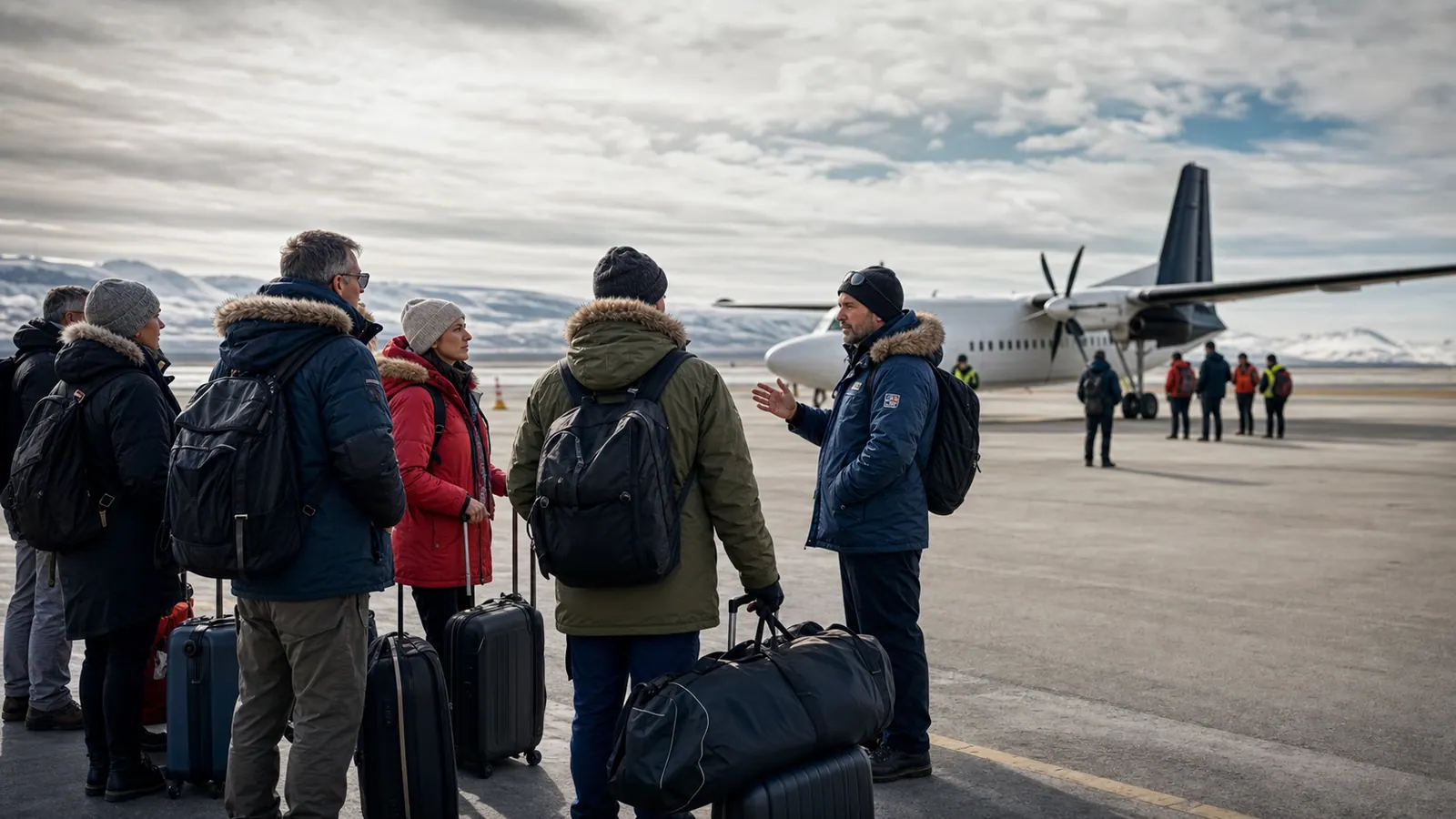
As polar travel becomes more familiar to travelers, Antarctica fly-cruise programs are becoming increasingly popular. By replacing four days of sailing across the Drake Passage with a roughly two-hour flight, they are attractive to people with limited vacation time and to travelers worried about seasickness.
However, the more efficient a trip looks, the lower its margin for error can be. If you think you can simply buy a ticket to Punta Arenas and board smoothly, you may be underestimating Antarctica. From control of local resources to onboard experience and emergency handling, the right travel group can be your most practical layer of protection.
1. The hard truth: the faster you fly, the more weather matters
The core risk of Antarctica fly-cruise programs is the weather window. Flights to and from King George Island use smaller aircraft and are highly dependent on local conditions. Compared with a traditional sail-in and sail-out itinerary, a fly-cruise adds meaningful delay risk.
The Drake Passage is the hardship of seasickness. A fly-cruise can become the hardship of waiting.
Independent travelers often value flexibility, but in an extreme environment, personal flexibility can be fragile. If weather closes the island and flights are canceled, you are not just changing a ticket. You are competing for rooms, transfers and information with hundreds of other stranded passengers. For this kind of journey, professional handling matters.
2. The travel operator's real advantage: resources built over years
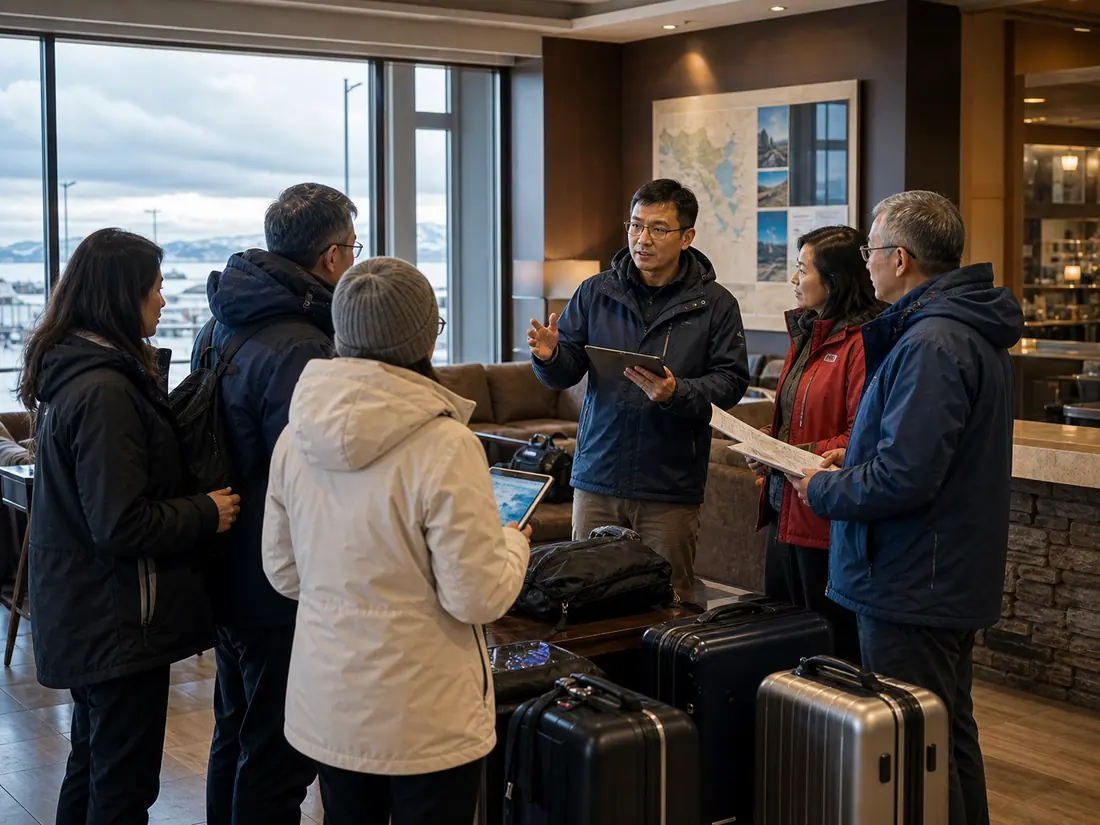
Most fly-cruise programs start from Punta Arenas in Chile. Hotel rooms are limited and local ground resources are not endless. When bad weather prevents one flight from leaving, hundreds of guests can suddenly need rooms and services in the same small city.
Securing rooms and extending stays
For independent travelers, the first worry is simple: where do I sleep tonight? Hotels may raise prices or prioritize partners with long-term agreements.
Operators with repeated charter and group experience, such as Newayer, plan for this risk in advance and often hold hotel arrangements across multiple days. If one sailing is delayed and guests cannot move as scheduled, the group can usually extend more calmly instead of negotiating from scratch at the last minute.
Turning delays into added experience
If delay time is spent sitting in a hotel lobby, it feels like a pure loss. A well-connected operator can turn waiting time into additional travel value. In a recent delay, instead of letting guests simply wait, our team used local resources to secure hard-to-get boat tickets and arranged a visit to a penguin island near Punta Arenas. This kind of alternative plan is very difficult to arrange independently at short notice.
3. Protecting the onboard experience
Once on board, are independent travelers and group guests the same? Not always.
An individual guest is one cabin number. A strong travel operator, especially one with charter experience, is a major partner of the ship operator. That affects communication and coordination.
More activity opportunities
A responsible operator will use its relationship with the expedition team to seek more landing and Zodiac cruising opportunities when conditions allow.
On one of our fly-cruise Antarctica departures, the outbound flight was delayed. After boarding, the travel operator coordinated with the ship team and increased the normal rhythm of two outings per day to three on suitable days. In five days, guests completed 14 outdoor activities. Not everyone has to join every outing, but when guests want to go, the opportunity matters.
Pushing for better routing when time is tight
When delays reduce available time, why would a captain adjust speed or try for a more ambitious route? For independent guests, the ship usually follows the fixed plan. A chartering or group operator can keep pushing for reasonable recovery of lost time.
In a delayed departure earlier this year, coordination between the travel team and ship team helped recover meaningful route value, including a push into the Lemaire Channel and higher-latitude areas. These adjustments rely on trust built through repeated cooperation.
4. Let the travel team handle negotiation while you stay calm
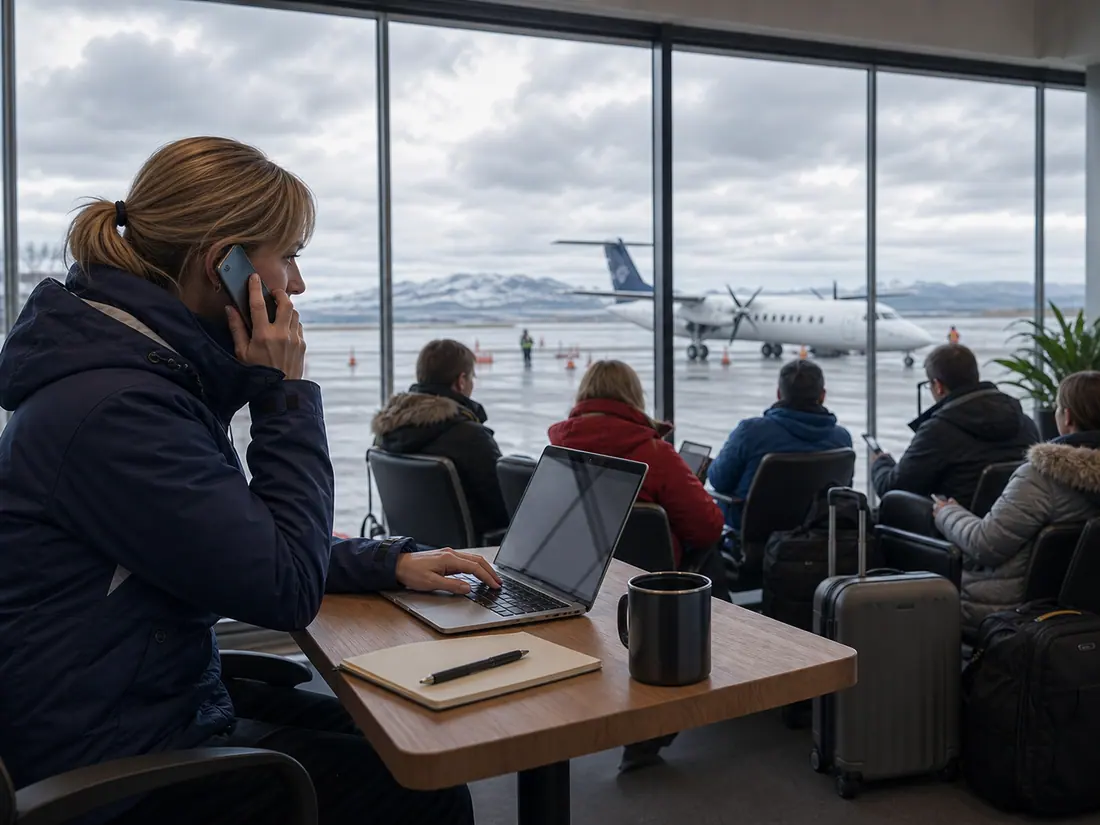
In Spanish-speaking South America, communication can become expensive in time and energy. Antarctica flight delays are often sudden, sometimes announced only shortly before airport departure.
Decoding and tracking information
You need to understand whether a flight is delayed or canceled, whether there may be a replacement flight, what happens to luggage, and whether transfers and hotels change. Even travelers with good English can struggle with local accents, Spanish notices and slow administrative processes.
A professional travel team has people tracking each link, communicating with local suppliers and explaining the next step clearly.
Insurance claims and rights protection
How do you obtain proof of delay? What documents does insurance require? What if an extreme case requires further negotiation? Independent travelers often have to absorb the stress themselves. Experienced operators have standard processes that reduce the mental cost and keep the disruption from overwhelming the journey.
5. Mutual support in extreme cases
In polar travel, operators are competitors, but they are also part of the same operational ecosystem.
Newayer has previously helped receive guests from other operators when ships were delayed. This kind of industry support means that in an extreme scenario such as a vessel issue or major route disruption, a professional operator's network can be very different from what an individual traveler can mobilize alone.
The essence of an Antarctica fly-cruise is trading extra cost and some adventure tolerance for time and comfort. But uncertainty is still part of the deal. The additional cost of joining the right group is not just for hotels, ship space and flights. It buys the confidence that, at the far end of the world, someone is negotiating, coordinating and looking for the best available path on your behalf.