
Which Month Is Best for Antarctica?
From November to March, Antarctica changes in price, weather, ice scenery and wildlife behavior. Choose by budget, whales, photography, chicks or deeper exploration.
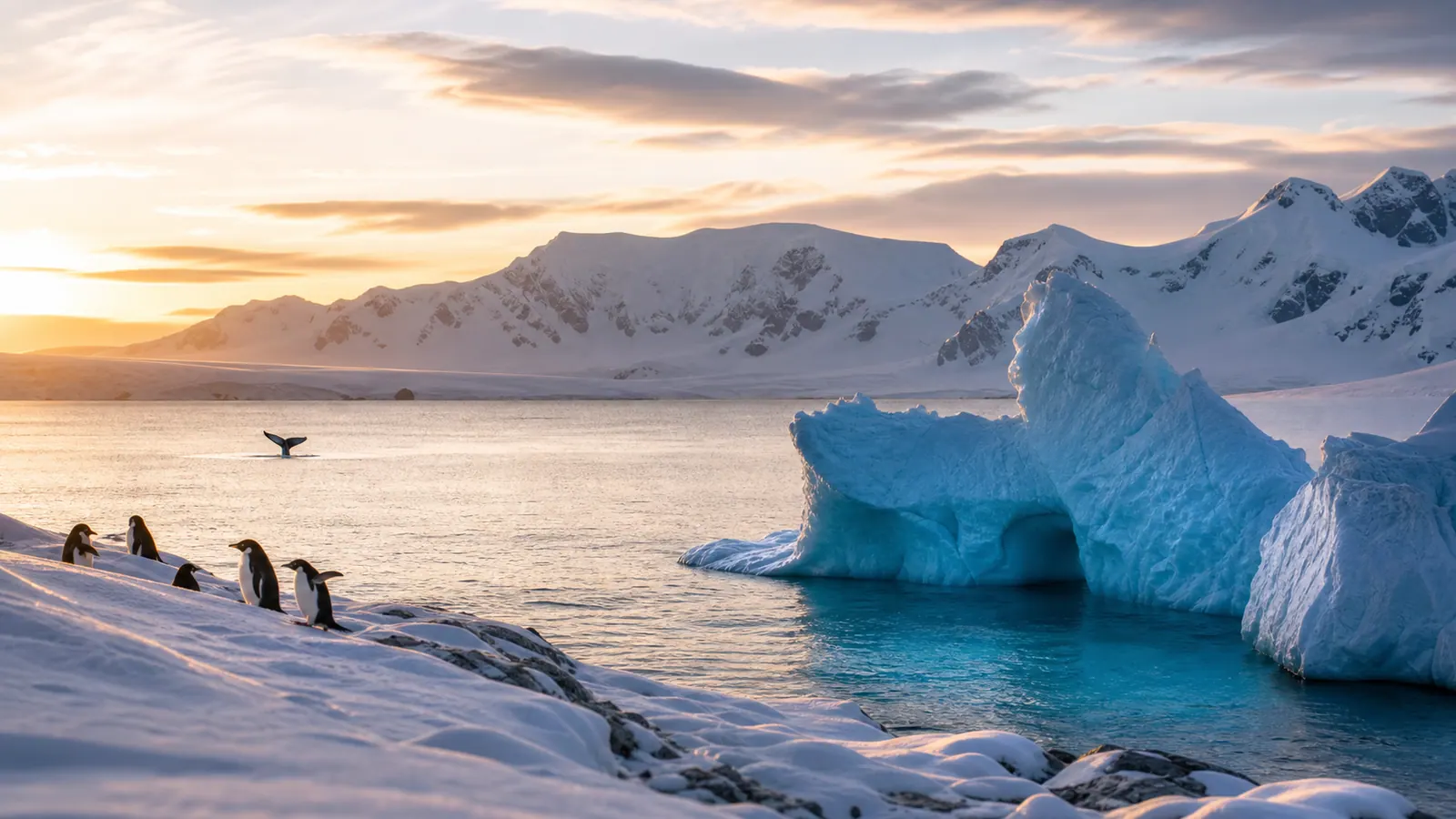
Choosing the right time is one of the most important decisions when planning Antarctica. Price, weather, scenery and wildlife behavior all change across the season. This guide helps you match the month with the experience you want.
Antarctica changes with the season
November: fresh snow, early season and nesting behavior
Price and experience: November is the beginning of the Antarctica travel season and is often more cost-effective, with early-season offers on some departures. Visitor numbers are lower, so the experience can feel quieter and more pristine.
Weather and scenery: Temperatures are colder and weather is more variable, but daylight is already long. Sea ice, large icebergs and an exceptionally clean blue-white landscape are the main visual highlights.
Wildlife: Penguin courtship and nest building are major highlights. You may see the classic behavior of penguins stealing stones to build nests. Leopard seals and Weddell seals may give birth on the ice. Whale numbers are lower than later in the season, but sightings are possible toward the end of a voyage.
Special note: November is one of the best periods for emperor penguin chick-focused routes, but emperor penguin programs require special itineraries such as the Weddell Sea, are expensive, and have limited observation sites.
December: hatching season and the height of daylight
Price and experience: Prices rise sharply as the high season begins. This is also when Antarctica has the longest daylight.
Weather and scenery: Conditions become more stable, with near-continuous daylight. Icebergs remain abundant, and glacier calving can be impressive.
Wildlife: Penguin chicks begin to hatch. Watching parents take turns incubating eggs and feeding chicks is one of the most moving wildlife experiences of the season. Whales begin arriving in larger numbers to feed in Antarctic waters.
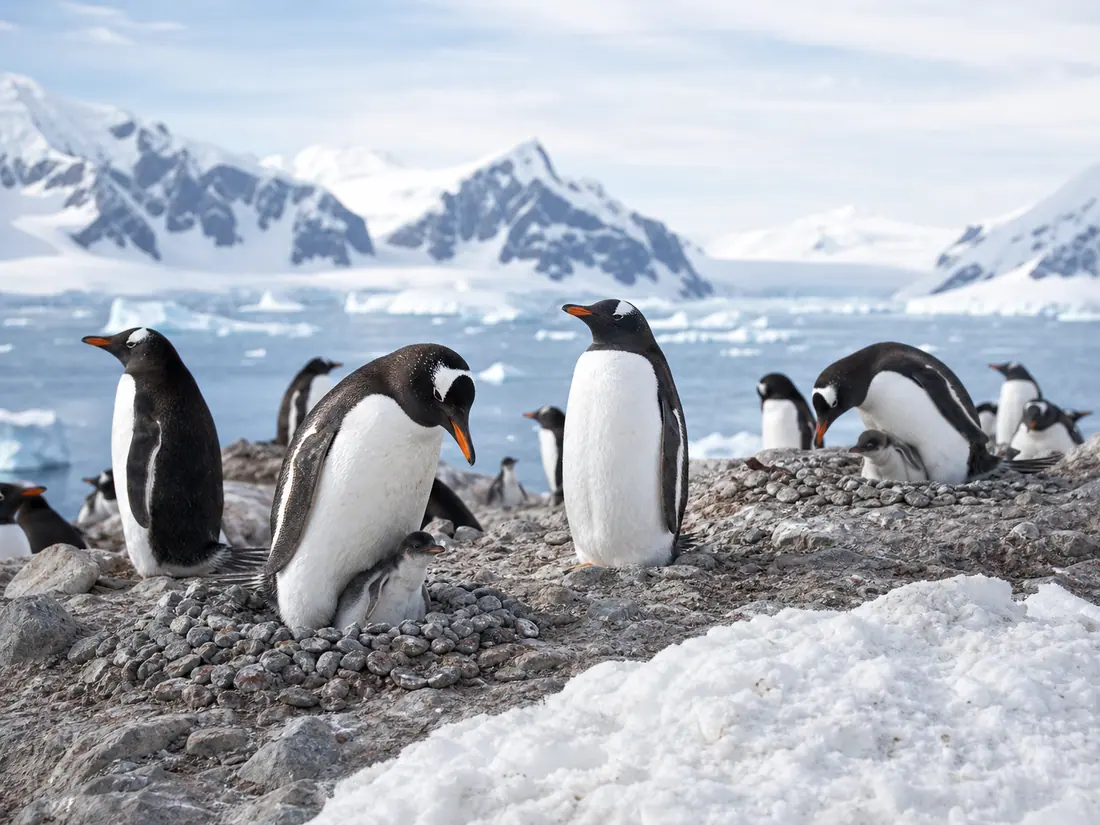
Special note: Active wildlife, stable weather and long daylight make December a strong all-round choice. South Georgia's king penguin colonies are also especially spectacular in this period.
January: the classic golden season
Price and experience: January is usually the most expensive period of the season, especially around Christmas, New Year and Lunar New Year. Popular cabins often need to be booked six to twelve months ahead.
Weather and scenery: Temperatures are at their highest and weather is usually the most stable. Landings are frequent and comfortable. Glaciers show deep blue tones under the sun, and the scenery is highly photogenic.
Wildlife: Penguin chicks grow quickly and the breeding season is in full swing. You can often see adults returning from the sea to feed hungry chicks. Whale watching also becomes excellent, with humpbacks and orcas appearing more often.
February: peak whale season
Price and experience: Prices begin to fall from the peak, and occasional late offers may appear. Value can be strong compared with the December-January peak.
Weather and scenery: Temperatures remain mild, but daylight starts to shorten. Sea ice has melted more extensively, opening possibilities for routes that push farther south, including Antarctic Circle attempts.
Wildlife: Young penguins begin to lose their down and enter the water for the first time. Whales are at their most abundant and active, often approaching ships with curiosity. This is one of the best months for whale watching and photography.
Special note: Softer sunset light returns in February, making it a strong month for photographers.
March: quiet beauty at the end of the season
Price and experience: March is the late season. Prices are lower, visitor numbers drop, and the atmosphere becomes quieter. It is also among the last chances of the year for deeper southbound routes, depending on ship and itinerary.
Weather and scenery: Temperatures cool, continuous daylight ends, and sunsets return. The light can be beautiful, and in rare cases travelers may even encounter early-season aurora.
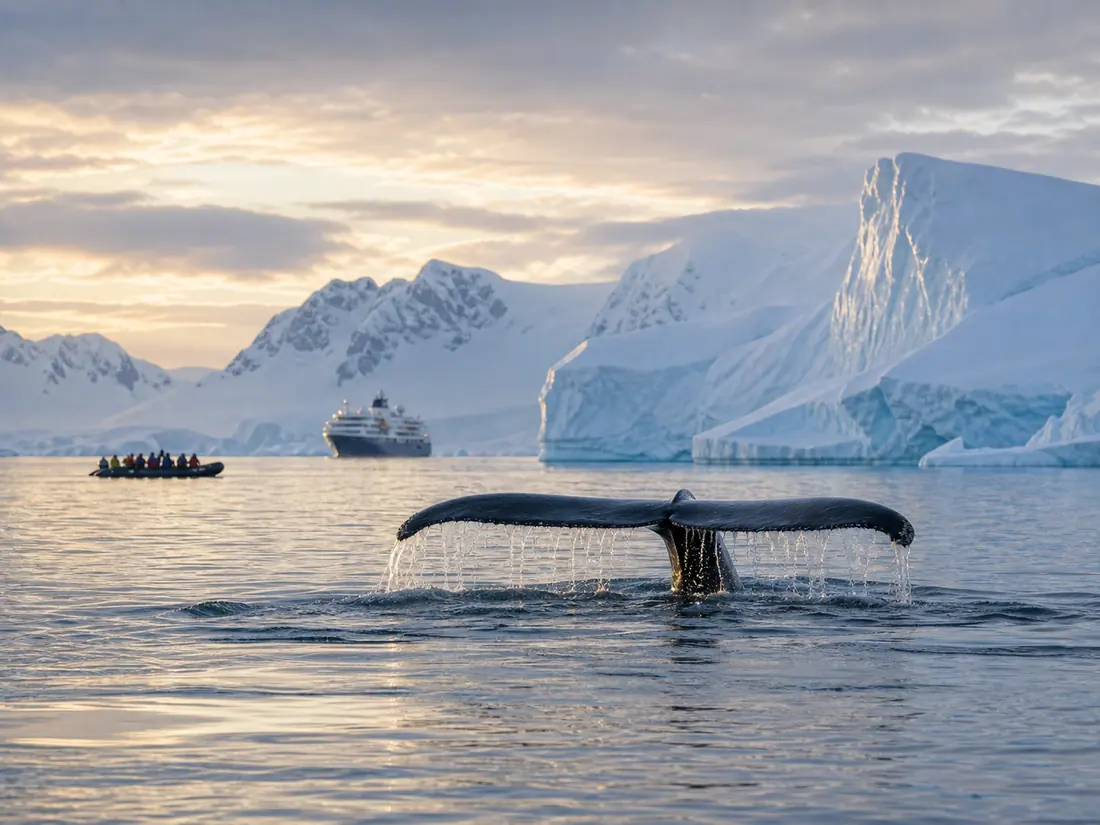
Wildlife: Most penguin chicks have grown and begin leaving the colonies for the sea. By mid-March many rookeries become much quieter. Whales may still be seen as they prepare to migrate north.
Special note: This month suits travelers who prefer fewer crowds, quieter landing sites and atmospheric light.
What to see: the seasonal essentials
Ice and glaciers: November and early December are best for the most pristine ice and snow. In January and February, warmer conditions reveal striking cobalt-blue glacier tones. March exposes more rock and sea-ice contrast as melting progresses.
Light: December and January offer more than 20 hours of daylight, ideal for long photography windows. February brings back softer sunset light. November and March offer lower-angle light and more dramatic shadows.
Time and budget
If budget comes first, look at November or March. Promotional cabins and late offers are more common in these months.
If the classic Antarctica experience comes first, December to January is the safest choice, but book early.
If whales are your priority, choose February without hesitation.
If photography is your priority, November and February are both strong but different: November for pure ice, February for soft light and active whales. Longer voyages of 20 days or more can cover a wider range of scenes.
If deeper exploration is your goal, February to March offers better conditions for Antarctic Circle attempts as sea ice retreats.
How to choose your best month
Ask yourself what you most want to see: penguin chicks, whales, blue ice, quiet landscapes or a deeper route.
Assess your budget. December and January can cost significantly more than November, February or March.
Consider your physical comfort. November can be colder and windier, while January and February are generally milder.
Match the route:
Classic Antarctic Peninsula routes work throughout the season.
Falklands, South Georgia and Antarctica routes are especially strong from mid-November onward, when king penguins and breeding wildlife are at their peak.
Antarctic Circle routes are strongest when sea ice retreats, usually January to February.
Emperor penguin routes are highly specialized, with a limited November-December window.
The best month is ultimately the one that matches the memory you most want to bring home from the white continent.