
Is There an Age Limit for Polar Travel?
Polar travel depends more on health and mobility than age. Before departure, guests should understand boarding, Zodiac landings, medical forms, seasickness and insurance.
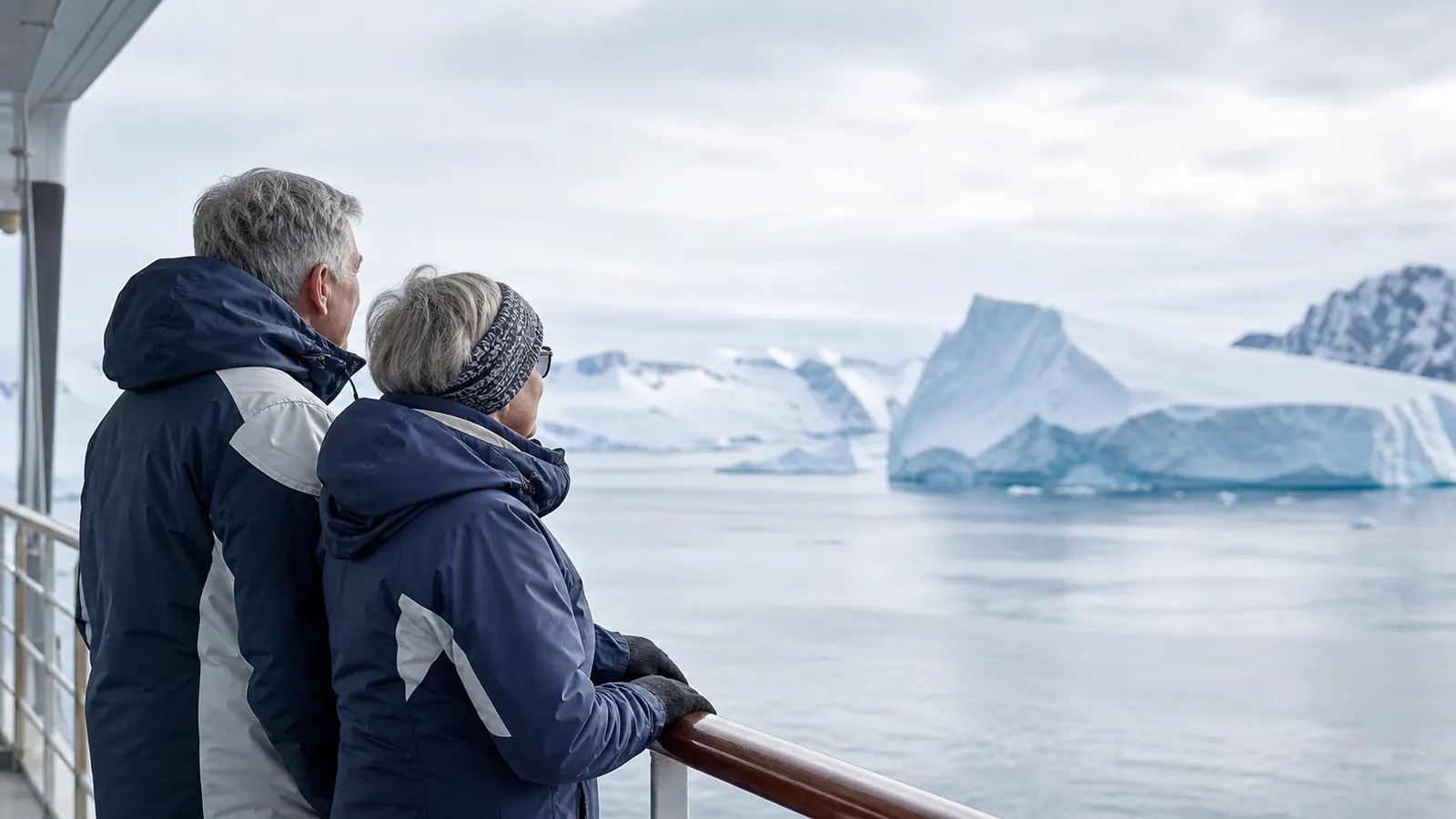
Polar travel does require a reasonable level of physical condition, but it is far less demanding than many people imagine. In our experience over more than 20 years, most healthy adults, including many travelers in their 70s, can complete the journey smoothly. The following points are the most important to understand before booking.
1. The core requirement: good health and independent mobility
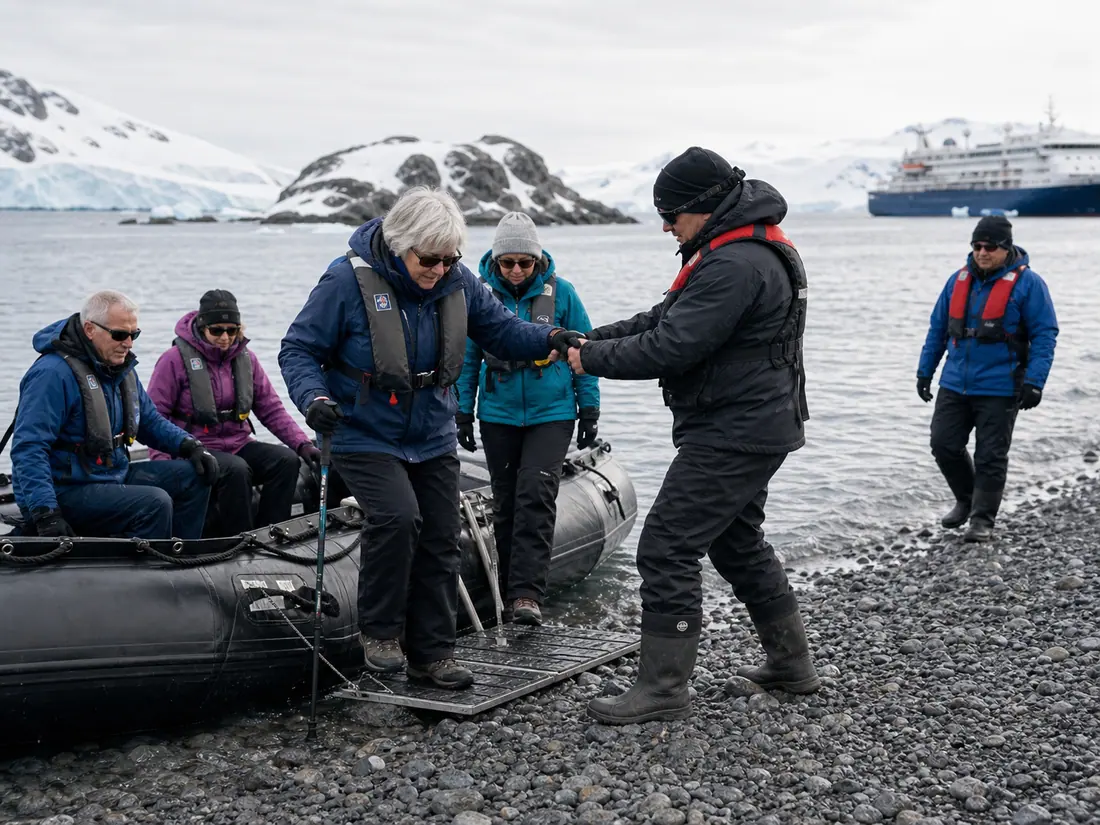
The key requirement for Antarctica and Arctic travel is not extreme fitness. It is the ability to move independently in normal daily situations. You should be able to:
Walk up and down stairs independently, similar to using a gangway when boarding or leaving the ship.
Step in and out of a Zodiac boat with assistance from the expedition team.
Walk steadily on wet, snowy or gravel-covered ground. A typical landing lasts around one to two hours, and the walking distance is usually not long.
Polar travel is not an endurance sport. It is a slower-paced journey focused on observation and exploration. Long treks or heavy-load hiking are generally not required.
2. Age is not the barrier; health is
There is no fixed upper age limit for polar travel. Newayer has served guests as old as 89. Travelers aged 60 to 75 are very common on expedition ships, and many complete the journey comfortably when their health is stable.
The deciding factor is physical condition, not the number on a passport. Guests aged 75 or above may be asked by some operators to provide a doctor's fitness-to-travel certificate.
3. Children: there is usually a minimum age
Most expedition cruise operators require children to be at least 8 years old to sail, and travelers under 18 must be accompanied by a parent or legal guardian throughout the journey. Some ships may accept children from age 6 by special request. If you plan to travel with children, the exact policy must be checked with the specific cruise operator before booking.
4. Medical forms and health declarations
All guests traveling to Antarctica or the Arctic need to complete a health declaration or medical assessment form honestly. These forms are usually submitted within 90 to 45 days before departure.
If you have a chronic condition such as heart disease, high blood pressure or diabetes, or if you have recently had major surgery, a doctor's confirmation may be required. This is a standard safety procedure used by expedition cruise companies to protect all passengers, so accurate disclosure is essential.
5. Seasickness: the Drake Passage question
For many Antarctica travelers, the Drake Passage is the biggest concern. Located in the strong westerlies of the Southern Ocean, the Drake can produce swells of several meters and has a fierce reputation.
The good news is:
Seasickness varies greatly from person to person. It is not determined by age or gender.
Ships carry experienced medical staff who can provide seasickness medication and, when needed, stronger anti-nausea treatment.
Many expedition vessels are equipped with stabilizers that significantly reduce motion.
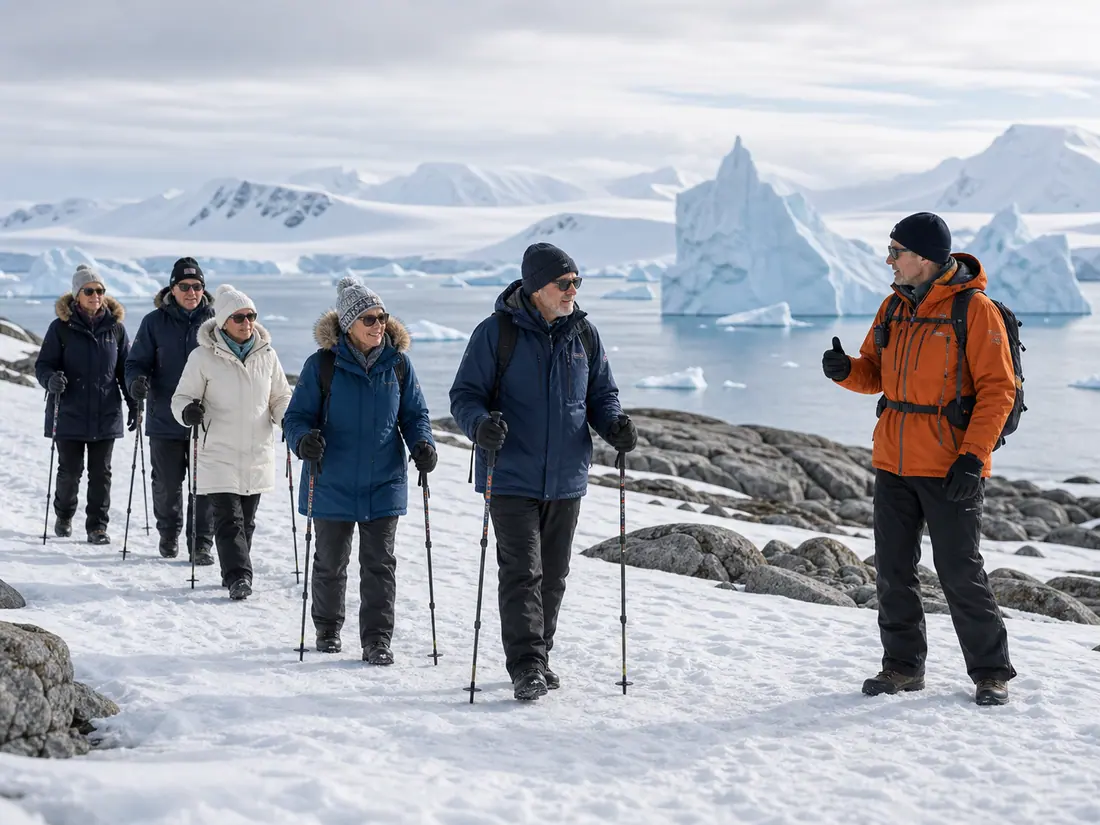
The expedition team will provide practical guidance after embarkation.
We recommend speaking with your doctor before departure and preparing a seasickness plan that suits your health profile. Arctic voyages are often sheltered among islands and fjords, so they usually do not involve a long open-sea crossing comparable to the Drake Passage.
6. Conditions that require extra attention
Please consult your doctor and tell us before booking if any of the following apply:
Severe or uncontrolled cardiovascular disease, such as unstable angina or uncontrolled high blood pressure.
Serious balance problems or long-term reliance on a wheelchair or walking aid.
Recovery from major surgery within the past two years.
A severe history of seasickness that is not well controlled by medication.
Pregnancy, which is prohibited by almost all expedition cruise operators.
Having heart disease or another chronic condition does not automatically mean you cannot travel. Stability is the key. Our leaders and advisors can help you understand the operator's requirements and prepare the necessary medical documents.
7. Insurance is mandatory and essential
All Antarctica journeys require travel insurance that covers medical rescue and emergency evacuation. Antarctica has no permanent full-service hospital facilities, and the nearest hospitals are in Chile or Argentina. A single emergency evacuation can cost more than USD 100,000.
Cruise operators strictly check insurance certificates before embarkation. Without compliant coverage, guests may be refused boarding. Similar insurance is also strongly recommended for Arctic journeys.
The information above is general guidance. Requirements vary by route, ship and operator. Before booking, we recommend a one-on-one conversation with a Newayer expedition advisor so we can assess the most suitable plan for your specific situation.